12 Seamless Red Brick Texture, Tile Wall Evaluation
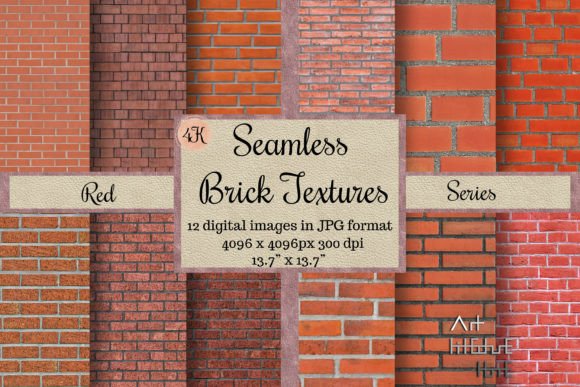
In the realm of digital design and architectural visualization, achieving a realistic surface finish often requires more than just basic color selection. The 12 Seamless Red Brick Texture, Tile Wall collection addresses this specific need by providing a curated set of high-fidelity digital assets. These resources are designed for professionals and enthusiasts who require authentic masonry patterns without the logistical challenges of physical photography or manual modeling.
This evaluation explores the technical specifications, practical applications, and strategic considerations associated with this texture pack. Whether you are working on a 3D interior render, a graphic design layout, or a website background, understanding the capabilities and limitations of these seamless brick textures is essential for making an informed decision.
Understanding the Product Specifications
The core value of the 12 Seamless Red Brick Texture, Tile Wall package lies in its technical consistency. Each asset in the collection is provided as a seamless tile, meaning the edges are mathematically aligned to allow for infinite repetition without visible breaks or seams. This feature is critical for creating large-scale backgrounds where the pattern must flow naturally across a wide area.
The resolution standards for this set are robust. Each image measures 4096 x 4096 pixels, which corresponds to approximately 13.7 x 13.7 inches at 35 cm when printed at 300 DPI. This level of detail ensures that the textures remain crisp even when scaled up for large-format printing or viewed closely in high-resolution digital displays. The inclusion of 300 DPI resolution makes these files suitable for both screen-based projects and physical print media, offering versatility that lower-resolution alternatives often lack.
- Format: JPEG files compatible with standard design software.
- Dimensions: 4096 x 4096 pixels (approx. 35 x 35 cm at 300 DPI).
- Quantity: 12 unique variations within the red series.
- Key Feature: True seamless tiling capability.
Primary Use Cases and Benefits
The utility of these textures extends across multiple disciplines. For architects and 3D modelers, the primary benefit is the ability to apply photorealistic surfaces to virtual walls quickly. Instead of manually texturing individual bricks, a designer can map one of these seamless tiles onto a plane or complex geometry, instantly achieving a cohesive look. The variation within the 12-image set allows for differentiation between different zones in a building, preventing the repetitive "stamping" effect that occurs when a single texture is overused.
Graphic designers also find significant value in this collection. When creating posters, brochures, or packaging that requires a rustic or industrial aesthetic, these textures serve as high-quality overlays. Because they are seamless, they can be used to fill entire backgrounds without worrying about edge artifacts disrupting the composition. The red color palette offers a warm, earthy tone that pairs well with modern minimalism, vintage styles, and industrial themes.
For web developers and UI designers, the 4096-pixel width provides ample data to create responsive backgrounds. While the full resolution may not always be necessary for web use, having the source file allows for optimization tailored to specific device requirements. The seamless nature ensures that whether the user scrolls down a long page or views the site on a tablet, the brick wall pattern remains uninterrupted.
Tradeoffs and Considerations
While the 12 Seamless Red Brick Texture, Tile Wall set offers high quality, there are tradeoffs to consider before purchasing. The most notable limitation is the format itself. These are provided as JPEG images rather than vector files or procedural materials. This means that while the resolution is high, the texture cannot be infinitely scaled without losing pixel density if it exceeds the original 4096-pixel boundary. Furthermore, the color scheme is fixed to the "Red Series." If a project requires grey, white, or weathered brick tones, this specific collection will not meet those needs without extensive post-processing.
Another consideration is the lighting and weathering effects inherent in the texture creation. Some users may expect textures that include dynamic shadows or uneven wear to simulate a real-world environment perfectly. However, seamless textures are typically optimized for neutral lighting conditions to ensure they blend seamlessly in various 3D environments. If your project requires highly specific lighting interactions, you may need to adjust the texture's brightness and contrast or combine it with other noise layers.
There is also the factor of file management. A 12-pack of 4096x4096 JPEGs can result in a relatively large download size compared to smaller thumbnail sets. Users should ensure their workflow supports handling high-resolution raster files efficiently to avoid performance lag in editing software.
Situational Fit: When to Choose This Pack
This collection is a strong fit for projects requiring industrial or urban aesthetics. It is particularly effective for:
- Interior Visualization: Creating accent walls in living rooms, lofts, or commercial spaces where a brick finish is central to the design theme.
- Marketing Materials: Designing advertisements for breweries, restaurants, or construction firms where a brick motif conveys stability and tradition.
- Game Development: Providing base textures for low-to-mid-poly game environments where seamless tiling is required for terrain generation.
- Digital Scrapbooking: Adding depth and texture to digital layouts that mimic physical paper or wall surfaces.
If your goal is to achieve a consistent, professional-grade brick appearance across multiple pages or screens without visible repeating patterns, this pack aligns well with your goals. The variety of 12 distinct textures helps maintain visual interest while keeping the overall color palette unified.
When to Consider Alternatives
Conversely, there are scenarios where this specific product may not be the optimal choice. If your project demands photorealistic imperfections that vary significantly from tile to tile, such as broken mortar, deep cracks, or moss growth, a set of non-seamless, high-detail photos might be preferable. Seamless textures are inherently uniform; while they hide the edges, they do not always replicate the chaotic randomness of natural aging unless specifically generated to do so.
Additionally, if your design language calls for minimalist or monochromatic schemes outside of the red spectrum, looking for a "Grey Series" or "White Series" would be more efficient. Attempting to desaturate red bricks to achieve a grey look can sometimes result in muddy tones that lack the vibrancy of a texture originally designed in that color range.
Finally, for projects requiring infinite scalability regardless of output size, vector-based brick patterns or PBR (Physically Based Rendering) materials are superior choices. These formats allow for scaling beyond the original resolution limits and offer better integration with advanced rendering engines that rely on normal maps and roughness maps rather than simple color textures.
Final Decision Insights
Selecting the right texture asset is a balance between budget, technical requirements, and aesthetic goals. The 12 Seamless Red Brick Texture, Tile Wall package represents a solid investment for users who need reliable, high-resolution red brick surfaces for immediate application. Its seamless format and 300 DPI resolution make it a versatile tool for both digital and print workflows.
However, success depends on matching the asset to the project. If your work involves standard brick wall simulations where a clean, repeatable pattern is sufficient, this pack is highly recommended. If your project relies on extreme customization, specific non-red colors, or vector scalability, you may need to supplement this purchase with other resources or seek alternative formats entirely.
By evaluating your specific needs against the features outlined above, you can determine if this collection serves as a foundational element for your next creative endeavor or if it is merely a supplementary option. Ultimately, the clarity of the texture and the ease of tiling are the deciding factors that separate a good design from a great one.